

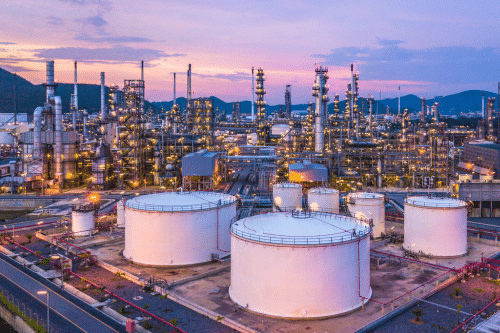
Corpus Christi is home to refineries, terminals, chemical plants, marine facilities, energy operations, manufacturers, and other businesses where downtime can become expensive quickly. Keeping those facilities operating takes more than having a contractor available when something breaks. It requires knowing which assets need specialized attention, which problems can be planned around an outage, and which support services need to be lined up before crews arrive.
The companies below represent different parts of that industrial network. Tanco Engineering is included first because its work centers on aboveground storage tanks. The remaining companies operate in separate areas such as environmental compliance, automation, electrical supply, hydraulic systems, safety, lifting, industrial hardware, welding supplies, and specialty rental equipment.
Table of Contents
1. Tanco Engineering Inc.
Tanco Engineering Inc. provides aboveground storage tank construction, repair, maintenance, engineering, and fabrication for facilities in Corpus Christi and throughout the United States.
That work can begin long before steel arrives at a site. A new tank has to be designed around what it will store, required capacity, operating conditions, applicable standards, site limitations, connected piping and equipment, and how the facility expects to maintain the asset over its working life. Tanco constructs tanks to standards including API 620, API 650, API 12D, and applicable AWWA requirements.
Existing tanks create a different set of decisions. Corrosion, roof deterioration, damaged bottoms, floating-roof components, seals, drainage systems, shell conditions, and structural issues can develop over time. In Corpus Christi, salt air, humidity, heat, and coastal exposure add another layer to maintenance planning.
A useful tank-maintenance program starts by understanding the condition of the asset rather than waiting for a visible failure. Some problems can be addressed during scheduled maintenance, while others may affect how long the tank can remain in service or what work needs to be completed during the next outage.
Tanco’s capabilities include tank bottoms, shells, roofs, structural components, floating-roof systems, seals, drain systems, and other tank-specific equipment. Its fabrication shop also produces nozzles and manways, ladders and platforms, floating suctions, floating-roof parts, seals, and shop-built tanks.
The company also manufactures aluminum geodesic dome roofs, including its Aluroof system, and works with floating-roof seal systems and airport fuel-storage projects.
About Tanco Engineering
Tanco was founded in 1979 and has completed more than 8,000 storage-tank projects. Its headquarters are in Loveland, Colorado, while its crews work throughout the United States, including Corpus Christi and the Gulf Coast.
In 2025, Tanco became part of employee-owned LT Corporation and continued operating under the Tanco Engineering name. Chad M. Derringer, who has more than three decades of storage-tank experience, serves as President and CEO.
For facility managers, one practical consideration is how many handoffs a project requires. When engineering, fabrication, project management, and field construction are spread across several companies, changes in scope can create delays or questions about responsibility. Tanco keeps those tank-specific functions within the same organization.
Before beginning a major tank project, facility teams should have a clear picture of the tank’s service, operating requirements, known condition, outage window, access limitations, connected systems, and any previous inspection information. Those details can have as much influence on the project as the tank’s diameter and height.
Headquarters: 1400 Taurus Court, Loveland, CO 80537
Phone: 970-776-4200
Service Area: Corpus Christi and industrial facilities nationwide
2. Trinity Consultants
Environmental work can influence an industrial project before the first piece of equipment is ordered.
Trinity Consultants maintains a Corpus Christi office and works with refineries, terminals, chemical plants, LNG facilities, manufacturers, energy companies, and other industrial operations on environmental and EHS matters. Its work includes New Source Review permitting, Title V permits, emissions inventories, dispersion modeling, regulatory applicability analysis, environmental auditing, and compliance management.
For facility managers, the timing of this work matters. A capital project that changes emissions, production, throughput, equipment, or operating conditions may have permitting implications that need to be understood before construction begins.
Environmental review can also affect project sequencing. Engineering teams may need to know what operating limitations or permit conditions will apply before finalizing equipment specifications or schedules.
Keeping permitting and compliance work separate from the physical construction scope also makes responsibility clearer. Trinity handles the environmental and regulatory side of the facility while contractors responsible for tanks, controls, electrical systems, and other assets handle their respective portions of the project.
Corpus Christi Office: 555 N. Carancahua Street, Suite 820, Corpus Christi, TX 78401
Phone: 361-883-1668
3. MRI Automation
A tank, pump, valve, or process line can be mechanically sound and still be difficult to operate if the control system does not provide reliable information.
MRI Automation works with industrial automation, instrumentation, SCADA systems, PLC and HMI controls, telemetry, communications, and electrical-control systems from its Corpus Christi operation.
Industrial controls can provide information about pressure, temperature, flow, level, equipment status, and other operating conditions. Those measurements become especially important when operators are managing stored products, transfer systems, pumps, valves, pipelines, and interconnected processes.
Planning controls early can prevent an awkward situation where new mechanical equipment is installed before anyone has worked out how it will communicate with the existing plant. Facilities should consider available signals, network architecture, control philosophy, alarm requirements, instrumentation, operator interfaces, and how information needs to be recorded or shared.
Automation work is separate from tank construction, but the two can meet at the same project. A new storage asset may require level monitoring, alarms, pump controls, valve positioning, or integration with an existing SCADA system.
Location: 701 Navigation Boulevard, Corpus Christi, TX 78408
Phone: 361-882-3444
Email: [email protected]
4. Corpus Christi Electric Co.
Industrial projects can involve sophisticated equipment while still depending on basic electrical materials being available when crews need them.
Corpus Christi Electric Co. has served South Texas since 1931 and supplies electrical products to industrial facilities and contractors. Its inventory includes distribution equipment, cable, controls, enclosures, wiring devices, and other materials used in maintenance, construction, and equipment installation.
Local inventory can become particularly important during shutdowns and turnarounds. A project schedule may include electricians, operators, inspectors, contractors, rented equipment, and production windows that have all been coordinated weeks in advance. Waiting on one electrical component can affect several other activities.
Facilities planning larger projects should identify long-lead electrical equipment early while separating those items from ordinary material that can be sourced locally. Transformers, switchgear, specialty controls, and certain distribution equipment may require far more planning than conduit, fittings, wiring devices, or standard cable.
That distinction helps purchasing teams focus attention where supply-chain delays can create the most risk.
Location: 2323 Leopard Street, Corpus Christi, TX 78408
Phone: 361-882-2564
Email: [email protected]
5. Austin Hose
Hydraulic hoses rarely receive much attention until a machine stops moving or fluid appears where it should not.
Austin Hose supplies hydraulic and industrial hose, fittings, pumps, valves, cylinders, filters, pneumatic components, and other fluid-power products from its Corpus Christi location.
Hoses operate under different pressures, temperatures, environments, and chemical exposures, so replacing one should involve more than finding something with the same diameter. Pressure rating, fluid compatibility, fitting type, routing, temperature, abrasion, bend radius, and operating environment all matter.
Recurring hose failures deserve particular attention. Replacing the hose may restore operation, but repeated failures can indicate poor routing, excessive movement, heat exposure, abrasion, pressure spikes, contamination, or another issue elsewhere in the system.
Facilities can reduce downtime by documenting frequently used assemblies and identifying critical hoses before one fails. Part numbers, lengths, fittings, operating pressure, and equipment location are much easier to record during normal operation than during an emergency repair.
Corpus Christi Location: 4401 Agnes Street, Corpus Christi, TX 78405
Phone: 361-452-7824
6. 24-Hour Safety
Industrial safety planning becomes considerably more complicated when work involves confined spaces, hazardous atmospheres, elevated areas, respiratory hazards, or multiple contractors working in the same part of a facility.
24Hr Safety provides industrial safety equipment, rentals, training, and field support for Corpus Christi facilities and contractors. Its services include breathing-air systems, gas detection, confined-space equipment, respiratory protection, fall protection, rescue teams, fire-protection equipment, monitoring systems, and turnaround support.
For large maintenance projects, safety requirements should be identified while the work scope is being developed. Waiting until crews arrive to determine breathing-air needs, rescue requirements, monitoring locations, or confined-space procedures can create avoidable delays.
Confined-space work is a good example. Entry may require atmospheric testing, ventilation, communications, rescue planning, attendants, retrieval equipment, respiratory protection, and documentation before anyone enters the space.
The safety provider does not replace the facility’s own safety program or contractor responsibilities. Its role is to provide equipment and services that support those requirements.
Main Office: 6766 Leopard Street, Corpus Christi, TX 78409
Phone: 361-299-2407
7. TNT Crane & Rigging
Moving industrial equipment involves more than knowing how much it weighs.
TNT Crane & Rigging provides crane rental, rigging, and heavy-lift services from its Corpus Christi operation.
A lift plan may need to consider equipment weight, center of gravity, pick points, crane radius, available setup area, overhead restrictions, underground utilities, ground conditions, nearby operating equipment, traffic, and the path the load will travel.
Existing facilities make those decisions more difficult because equipment is rarely installed in an empty field. Pipe racks, buildings, process equipment, electrical systems, roads, and other infrastructure may limit where a crane can set up or how a load can move through the site.
Facility managers can make lift planning easier by providing accurate equipment drawings, weights, access information, site restrictions, and proposed sequencing early in the process.
Crane availability should also be coordinated with the larger outage schedule. A heavy-lift operation may affect several contractors at once, so delays can ripple through work that appears unrelated to the lift itself.
Corpus Christi Location: 6485 I-37, Corpus Christi, TX 78409
Phone: 361-289-5438
24-Hour Service: Available
8. Gulf Coast Nut & Bolt Supply
A maintenance project can involve millions of dollars in equipment and still come to a stop because crews are missing the right fastener, anchor, fitting, tool, or piece of hardware.
Gulf Coast Nut & Bolt Supply has served the Coastal Bend since 1977 and supplies industrial facilities, contractors, maintenance departments, oil-field operations, construction companies, municipalities, and other organizations throughout South Texas. Its Corpus Christi inventory includes standard and metric fasteners, concrete anchors, rods and studs, tools and equipment, cutting and metalworking products, lifting and rigging equipment, pneumatics, electrical supplies, safety products, abrasives, adhesives, sealants, lubricants, and other industrial supplies.
Fastener selection deserves more attention than it sometimes receives. Thread size and pitch, grade, length, material, coating, load requirements, corrosion exposure, and the equipment being assembled can all affect which part belongs in a particular application. In a coastal industrial environment, corrosion resistance can be especially important when hardware will be exposed to moisture, salt air, chemicals, or outdoor conditions.
Availability becomes equally important during maintenance outages and turnarounds. Gulf Coast Nut & Bolt maintains a large local inventory and can special-order items it does not have in stock. The company also offers local delivery and inventory-management services intended to help customers keep frequently used industrial parts and supplies available before they become an emergency need.
For facility managers, documenting commonly used fasteners and specialty hardware can prevent unnecessary downtime. Part numbers, dimensions, grades, materials, equipment locations, and normal quantities are easier to identify during routine operation than when a crew is waiting for a repair to continue.
Gulf Coast Nut & Bolt has supplied materials for projects including the Harbor Bridge Project, Corpus Christi Marina, Tesla Lithium Refining Plant, and SpaceX Brownsville.
Location:
4501 Leopard Street, Corpus Christi, TX 78408
Phone: 361-884-8074