

As we move into the first quarter of 2026, the Singapore real estate market has officially entered its “Correction of Convenience.” With the broad market price index stabilizing at a sustainable $3.2\%$ growth, the era of buying anywhere and expecting a windfall is over. In 2026, the real alpha is found in “Structural Assets”—properties that sit at the intersection of major infrastructure completion and a fundamental shift in how Singaporeans live.
From the lush, car-lite corridors of the West to the newly connected coastal enclave of Bayshore, the map of value has been redrawn. Investors are no longer looking at districts; they are looking at ecosystems that solve the 2026 problems of commuting, wellness, and work-life flexibility.
Table of Contents
The West: Unlocking the “First-Mover” Value in Tengah
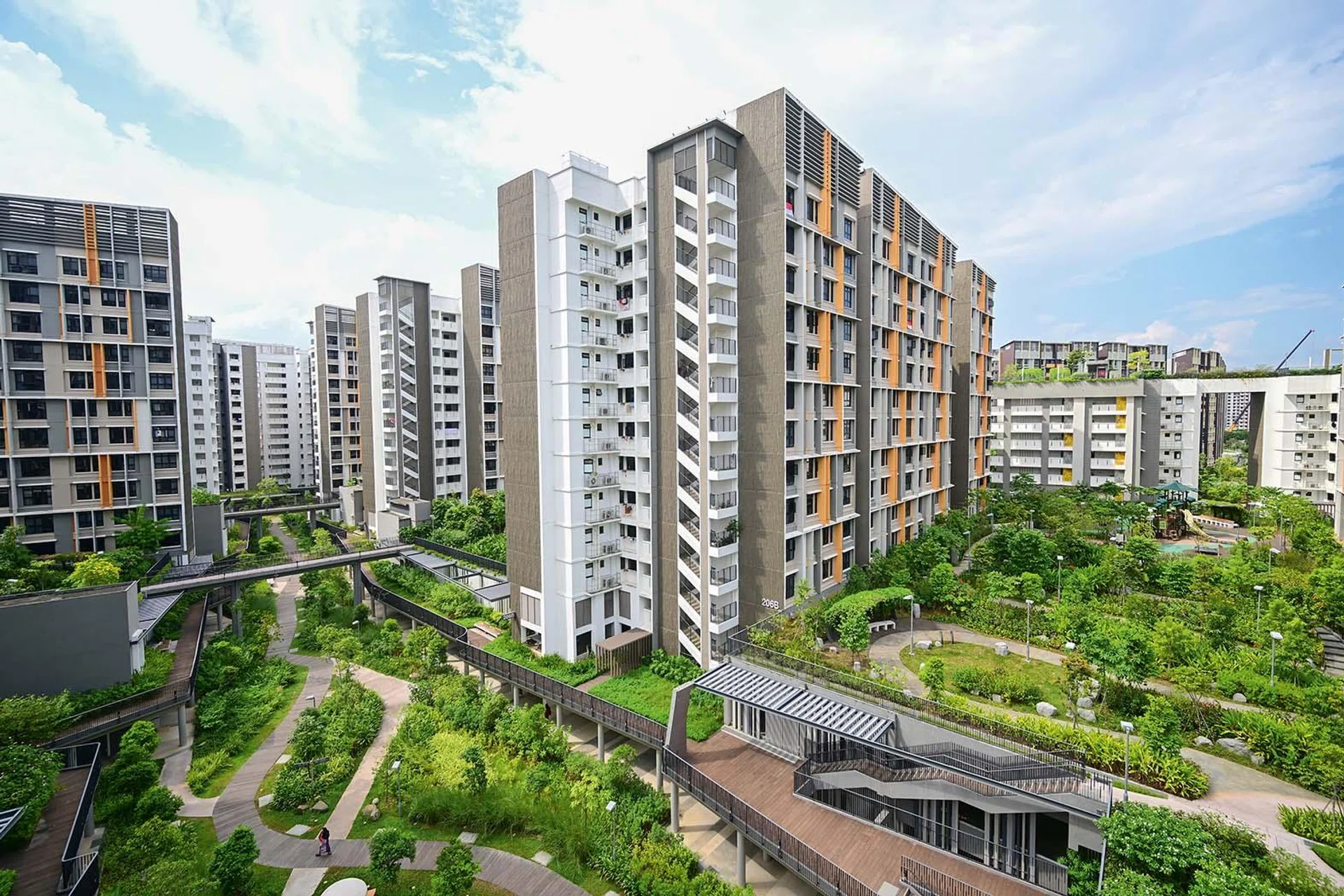
Tengah is no longer a town of the future; it is the town of today. With thousands of residents now occupying the Plantation and Garden districts, the “forest town” vision has become a tangible reality. The 2026 opening of the Jurong Region Line (JRL) has effectively bridged the gap between residential life and the high-tech jobs at the Jurong Innovation District.
The definitive play in this region is Tengah Garden Residences. As the district moves into its next phase of maturity, the focus has sharpened on the Tengah Garden Residences facilities. These are not just standard pools and gyms; they are biophilic infrastructures designed for a carbon-conscious era. Featuring automated waste systems, smart-energy monitoring, and direct, traffic-free access to the 20-hectare Central Park, these facilities cater to a high-value tenant pool that prioritizes sustainability over traditional luxury tropes.
Furthermore, the “social hardware” of the West has been upgraded. The establishment of dedicated healthcare hubs and the relocation of key primary schools mean that family living in Tengah has become a lifestyle of choice rather than a compromise. For the 2026 buyer, the ability to raise children in an environment where they can navigate garden trails to reach school without crossing a single road at-grade is a unique selling point that legacy estates simply cannot retrofit.
The East: Bayshore’s Coastal Renaissance
While the West masters the forest, the East is undergoing a radical recalibration of its prestige status. The 2026 completion of the Thomson-East Coast Line (TEL) Stage 5 has fundamentally “shrunk” Singapore. Bayshore, once a weekend getaway destination, is now a 20-minute rapid-transit ride to the Marina Bay Financial Centre.
Vela Bay stands as the vanguard of this transformation. As the first private project to launch within the new Bayshore master plan, it represents the 2026 shift toward “Blue Urbanism.” The project is strategically positioned to capture the urban lifestyle Vela Bay represents—a rare hybrid of seaside tranquility and ultra-high-speed digital connectivity.
The investment appeal here is driven by the specific Vela Bay condo features, which anticipate the needs of a 2026 hybrid workforce. Integrated co-working pavilions with sea views, high-capacity EV charging suites, and smart-parcel hubs cater to a high-income demographic that values time and convenience above all else. With the government’s “Long Island” reclamation project providing a long-term hedge against coastal volatility, these seaside assets are increasingly being viewed as legacy properties with significant capital protection.
2026 Strategic Analysis: Forest vs. Sea
For the 2026 portfolio manager, the decision between the “Western Gateway” and the “Eastern Waterfront” is a choice of asset character.
| Investment Pillar | The Tengah Narrative | The Bayshore Narrative |
| Primary Driver | Eco-Industrial Synergy | Transit Maturity & Coastal Scarcity |
| Asset Class | High-Growth Suburban Anchor | High-Prestige Coastal Mixed-Use |
| Target Audience | Tech-Families & ESG Advocates | High-Income Executives & Expats |
| Key Advantage | First-mover price entry | Absolute scarcity of beachfront land |
Conclusion: Investing in the New Geography of Success
The Singapore of 2026 is a polycentric city where the most valuable square footage is the one that connects the resident to a larger, sustainable ecosystem. Whether you are banking on the community-driven family living in Tengah or the high-prestige urban lifestyle Vela Bay provides, the key is to invest where infrastructure and lifestyle intersect.
The opportunity window for these gateway assets is defined by the completion of infrastructure—a “sweet spot” where the risk of the unknown has vanished, but the full price appreciation of town maturity hasn’t yet peaked. Positioning your portfolio in these growth corridors today is more than a property buy; it is a strategic alignment with the new geography of Singaporean success.